
Night Owl Olive
A native New Yorker, Crystal N. was raised in Flatlands, Brooklyn, with dancehall and soca, disco and freestyle in the background. At 8, she fell in love with house music, listening “religiously” to DJ Tony Humphries’ mixes on the radio late at night. That was in the early 1990’s and it took another 20 years, graffitis and hip hop, before she became the DJ and music producer known as Olive T. As the city reopens, she stands as one of its most exciting talents. And she’s getting ready for a new beginning.

Photos by Jérôme Viger-Kohler
NOUVEAU YORK: You’ve got a busy Pride weekend coming up, playing alongside other New York favorites like Honey Dijon, Occupy The Disco, Musclecars etc. It must feel like a relief after 15 months of pandemic restrictions. Do you feel optimistic about this summer in the city?
OLIVE T: I’m definitely optimistic for this summer in NYC regarding clubs, I suppose the service industry as a whole. I feel like it’s incredible we still have nearly all the clubs we did pre-pandemic which was no small feat in America.
NY: What’s your state of mind?
OT: I’m excited. I’m a compartmentalist so I managed to put my “DJ brain” away from the lockdown and closing of clubs. I enjoy the energy of playing music for people, but I don’t crave it. I look at it as whip cream on top of a musical sundae. The biggest thing I’m attempting to rebuild is control over my performance and social anxiety. I believe the only way to get it back again is through action which I’m happy to now have the opportunity to do.
NY: Right before NYC shut down in March 2020, you were featured in DJ Magazine as “one of the emerging artists we need to hear”, saying “2020 promises to be the year the New Yorker makes her production mark”. That could have been bad timing as a DJ, but as a producer, you actually took the time stuck at home to make music and release it. As an artist, what did you learn from that special year 2020?
OT: I learned that my full time career really held back my pursuit and progress of being a music producer. Lockdown gave me space and time to create and learn many things. I realized that I needed to make making music part of my regular routine regardless of my job circumstances.
NY: And as a native New Yorker, what did you learn about your city?
OT: The city surprised me by the way people who stayed in the city came together and started to form mutual aid groups and serve people in ways that actually helped, such as food fridges and banks. There was an awakening of many things for a while from a substantial amount of people, which was fascinating to see.

“I definitely fantasized about living in Manhattan. I always liked how quiet and weird the Upper West and East side feels to me.”
NY: Your show on The Lot Radio is called Olive’s Garden. Could you describe your own “little garden”, your daily routine in the city during the pandemic?
OT: Well, my apartment became a bit of a garden [laughs]. My partner and I brought a large bird of paradise and let a hanging plant grow along our canopy bed frame. Besides actual gardening, I set a daily routine for myself which consisted of making breakfast, coding schoolwork, making new dinners and ending the night watching old episodes of Top Chef.
NY: While interviewing people about their connection with New York, I noticed native New Yorkers don’t have the same connection as people who moved here, or people who love the city from a distance. I guess you don’t really fantasize about NYC as a special place when it has been your background since you were born, did you?
OT: I definitely fantasized about living in Manhattan. I always liked how quiet and weird the Upper West and East side feels to me. I used to be a bike courier and I did deliveries all over Manhattan, so I got to see how people who live in the “city” lived. I call where I grew up in Brooklyn (Flatlands’neighborhood) “suburban-urban” and I lived on Long Island for years, so Manhattan was always the exciting place where you could club and bar hop and see three different bands or parties in one night. The accessibility to events was always the lure of NYC for me.
NY: Speaking about “Native New Yorker”, you picked that late 70’s song by Odyssey in your classic NY selection, as it reminds you of your parents going to work in the World Trade Center in the 80’s. Another of your childhood record is Lisa Lisa & Cult Jam’s “I Wonder If I Take You Home”. You can not be more New Yorker than that. Do you have a specific memory of the 80’s that connects you with the city?
OT: Oh no, I don’t have many memories of the 80’s NYC. I only inherited my parents record collection and listening habits from then and the 70’s. I grew up in the 90’s and, um, New York wasn’t great then, it was pretty dangerous. I do remember how it still felt like there was a community and neighborhood where people talked to one another, had yard parties, potlucks and looked out for each other – that was good.
NY: Were your parents going out dancing when you were a kid?
OT: My parents definitely went out to clubs in Manhattan when they were younger, but when I was little my mom stuck to West Indian house parties in Brooklyn. I believe growing up in a party atmosphere set me up for the future.
NY: At what point did you decide you wanted to become an artist?
OT: I loved parties and I especially wanted to be the person that selected the music. I observed how music made people react and feel, which eventually prompted me to try my hand at production and creating similar sounds, coupled with self expression.
“I would listen to the radio religiously as a kid and I was known as a night owl that refused to go to sleep.”
NY: Last time we chatted for The Standard, you told me you discovered house music very young, in the early 90’s, listening to Kiss FM late at night, Tony Humphries’ mixes. It’s incredible how those mixes had an impact all around the world, but you were just a kid. Could you tell us what grabbed your attention, what was the magic behind those radio mixes?
OT: Oh yeah, I would listen to the radio religiously as a kid and I was known as a night owl that refused to go to sleep. One night I discovered the programming changed on Kiss and they would play house music later. I believe I was drawn to it because it was repetitious, soulful, fast and had a familiar 4x4 kick that I heard in Soca music. Plus Crystal Waters, Snap!, Technotronic were huge at the time and my mom had a Sounds of Blackness CD so I was familiar with house.
NY: How would you describe your teenage years in NYC?
OT: By my teenage years, I had moved out to Long Island for high school because my parents felt the crime in the city was getting too bad. I experienced a huge culture shock and had to figure out what other kids were into and what was cool out there. By then the internet existed so I got into many different kinds of scenes far from the dancehall and soca that I grew up with. I definitely lost what was happening in the city until I started to take the [Long Island Railroad] train out to the city. I would frequent [Manhattan record shops and parties] Fatbeats, CBGB’s NYHC matinees, ABC No Rio, and Breakbeat Science.
NY: Your next record “Going Up” will be released in July on Bouquet Records. I just listened to the preview and for sure there is this 90’s NYC vibe. I can hear some Danny Tenaglia and Junior Vasquez influences. Were you aware of the Manhattan club scene in the 1990’s?
OT: I was vaguely aware of the 90’s club scene because my aunts would party, but I was too young to know where or care. The first time I went to a proper legal club was in Williamsburg or Greenpoint [in Brooklyn] and for some reason [German DJ and producer] Dr Motte was playing a small venue and that’s when I discovered minimal techno. After that experience I went to Table 50 in Manhattan to see [French electronic artist] The Hacker and I got in with a fake ID. It’s funny to hear that my music has a heavy NY 90’s house vibe to it because it apparently stuck with me after hearing it at 8 or 9 years old.

“To me, making it in NY involves working a creative job that can financially support and give space to creating art.”
NY: Through the 80’s and 90’s, the Twin Towers were always in the background. Until they were not anymore. And that happened around the time you became an adult. How did you process that cataclysm?
OT: It was odd for me because my mom was working at World Trade Center in 1993 when it was bombed. She stopped working there shortly after. I never actually went to WTC and rarely left south Brooklyn and Queens, so the big accident was very foreign to me. I was in school in Long Island when it happened in 2001 and a lot of students and teachers had relatives that worked in Manhattan, so it was an intense day.
NY: How did that affect your next decade, the 2000’s in the city?
OT: I didn’t start partying until I was 18, two years later, and it was a weird time for the city. Presently the vibe of NYC post Covid 19 feels relevant to the energy of the city post 9/11.
NY: Fast forward to the 2010’s. During that decade, you had been deejaying around town and [Detroit DJ and music journalist] Tajh Morris just described you as “one of the unsung heroes of the last decade in NYC clubbing who is finally starting to get their dues”. In the 2010’s, NYC saw a rebirth of nightlife and dance music, mostly centered in Brooklyn, and there definitely were new and exciting things happening. In your opinion, what was one of the decisive moments that captures that rebirth?
OT: I think Studio B opening [in 2006] followed by Output [in 2013] created the path for smaller clubs to open in Brooklyn. Output drew dance music fans out to an official venue where they discovered just how many other fans existed in New York. People saw having a financially sustainable venue of the sort worked and they began to create their own spaces, which means we now have many electronic music oriented venues that all have their own distinct sound. If you build it, they will come happened very fast here. Plus the rent in Brooklyn was more affordable than Manhattan and the audience lives around the clubs.
NY: Your Pride 2020 Mix has been described as “exemplifying the sound of NYC, capturing the energy of the apple’s house music legacy.” Do you agree with that?
OT: Those are pretty weighted words! I’m just attracted to music that has elements of the NY house sound I grew up with, but my exposure and affinity towards different types of dance music has a great influence on my sets. My goal has always been to join new and old in a refreshing and interesting way.
NY: When I asked you “What’s your definition of making it in NY?” you said “I like to keep the definition of making it in this city very minimal because there's so much one can get involved in.” What does your future in the city look like?
OT: I like to explore different paths and I discovered nothing keeps my attention or passion as much as music and the music industry does. Before Covid I was planning on working toward an audio visual production path. I think the most realistic version of “making it” involves working a creative job that can financially support and give space to creating art.
NY: But you’re about to move out of NYC. How does it feel to leave the city as a native?
OT: I’m moving to Geneva, Switzerland at the end of the summer and it will be the first time I will live outside of New York. I’m very excited to start the new adventure and curious to see how I figure out a way to exist comfortably in a foreign place. I’m pretty sad to be leaving NY because it’s all I know and the city is rebuilding in full force right now with tons of creative potential. However, I look forward to acquiring the skill of being able to live in other places, learn different cultures, observe different music scenes, and to travel outside of America. If I learned one thing during the past year it would be to “live” to the fullest in the now.
MUSIC
Soundcloud. Spotify. Bandcamp.
Olive T Picks Five New York Classics
Style Wars (directed by Tony Silver, 1983)
“I grew up seeing graffiti, knew kids in school who did it and always admired the colors, style, and audacity that went along with it. Watching Style Wars had a great impact on me and started my journey to learning all I could about 70’s-90’s graffiti. You can still see a few pieces of the artist featured in this movie if you look close enough around NYC.”
Lisa Lisa & Cult Jam “I Wonder If I Take You Home” (1985)
“One of the earliest songs I could remember. It just feels super 80’s and was the breakout hit of the Freestyle sound to me. I remember hearing it playing casually everywhere – house parties, out of homes and cars. I didn’t realize until much later on that freestyle was unique to the East Coast and New York specifically.”

“Strictly The Best 6” (1992)
“Strictly the Best was a compilation released by Jamerican record label VP based in NYC. My parents collected all their Strictly the best compilations for years. I knew a lot of people who had the series in their homes and would play it all the time. I came across artists like Beres Hammond, Sanchez, and Half Pint through the compilations. It captures a time when the West Indian community in southern Brooklyn was tight knit.”
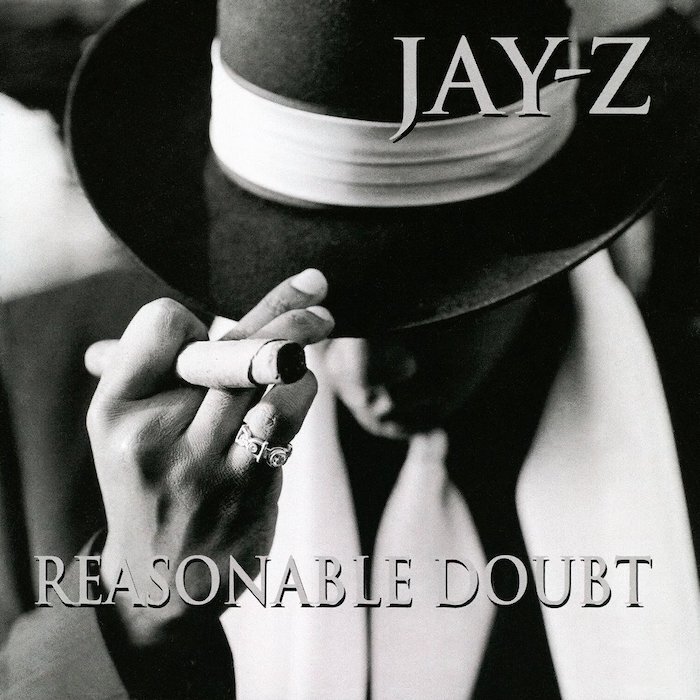
Jay Z “Reasonable Doubt” (1996)
“I was a big Nas fan and even bigger AZ fan growing up, but when I think back to pivotal exceptionally NY rap albums during a time when NY was still familiar to me ‘Reasonable Doubt’ comes to mind. It captured a time and told the story of hustlers particularly from Brooklyn in the late 90’s.”
